Space Sector Rally: AST SpaceMobile Hits Record Highs Amidst SpaceX IPO Rumors and Lunar Strategic Shift
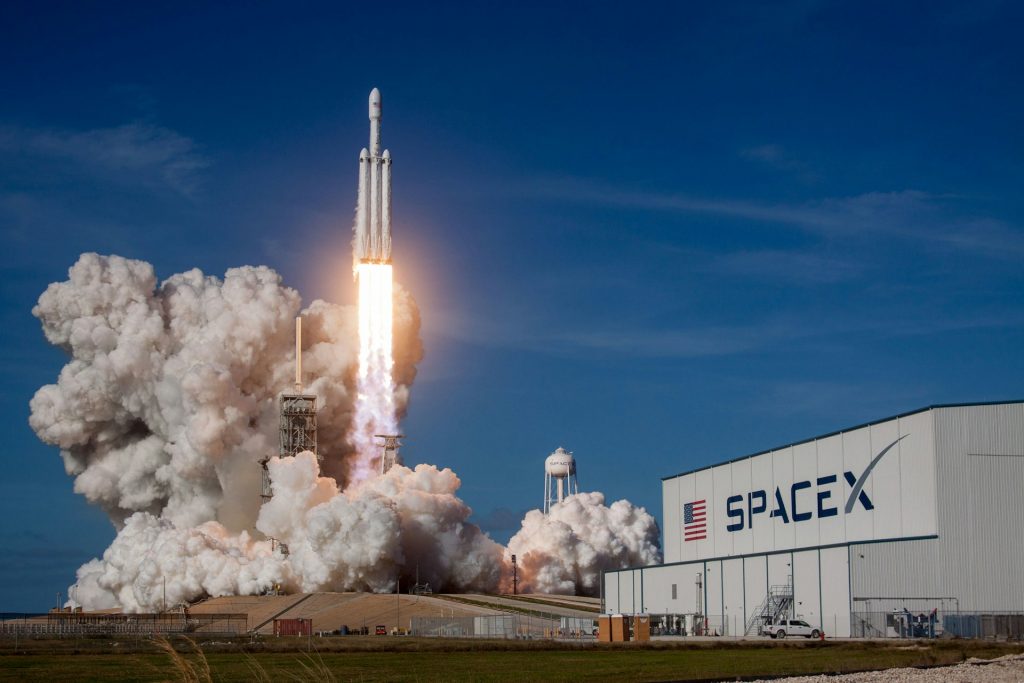
The commercial space industry is experiencing a surge in investor confidence this week, headlined by AST SpaceMobile (ASTS) reaching new all-time highs. The rally is being fueled by a convergence of company-specific milestones and a growing frenzy surrounding a potential initial public offering from industry titan SpaceX.
AST SpaceMobile shares jumped on Wednesday, riding the momentum of the company’s announcement regarding its upcoming BlueBird 7 mission. Scheduled for a late February launch, this mission represents a significant technological leap. The satellite will carry the largest commercial communications array ever deployed in low Earth orbit, capable of supporting peak data speeds of up to 120 Mbps. This launch is particularly notable as it marks the inaugural commercial use of the New Glenn rocket. The vehicle is critical to the company’s roadmap, designed to carry multiple BlueBird satellites per flight as AST aims to deploy between 45 and 60 units by the end of the year.
Beyond the hardware rollout, AST SpaceMobile is solidifying its institutional footing. The company has secured a spot on the U.S. Missile Defense Agency’s SHIELD program, a development that could pave the way for future government task orders. Underpinning these operations is a massive intellectual property moat, consisting of over 3,800 patents aimed at facilitating direct-to-cell voice, data, and streaming services that work with standard, unmodified mobile phones.
The SpaceX Halo Effect
While AST SpaceMobile has its own catalysts, the broader sector is undoubtedly benefiting from the gravitational pull of SpaceX. Market sentiment has been electrified by a Financial Times report suggesting Elon Musk is exploring a SpaceX IPO as early as mid-June. The timing is rumored to coincide with a rare Jupiter–Venus conjunction and Musk’s own birthday, a flourish typical of the billionaire’s style.
The report indicates SpaceX could seek to raise up to $50 billion, with valuation estimates soaring past traditional mega-IPOs. However, banking insiders have urged caution, noting that a June timeline would be incredibly tight given the rigorous SEC filing and roadshow requirements. SpaceX has yet to confirm these plans, but the mere possibility of a blockbuster listing has triggered a capital rotation into space-related themes, lifting publicly traded peers like AST SpaceMobile.
Musk’s Strategic Pivot: The Moon Must Come First
Amidst the financial speculation, SpaceX is undergoing a drastic operational shift. In a surprising update shared on X (formerly Twitter), Elon Musk announced that the company’s immediate focus is moving away from Mars and toward the Moon. The new objective is to establish a “self-growing city” on the lunar surface within the next decade.
“We can potentially achieve this in less than ten years, whereas on Mars it would take more than 20 years,” Musk wrote. This contradicts his previous rhetoric; as recently as last year, he described the Moon as a “distraction” and insisted on flying “direct to Mars.” The revised roadmap suggests that while a Martian city remains the ultimate goal, work on it will not begin in earnest for another five to seven years.
Musk cited logistical realities for the pivot. A flight to the Moon takes merely two days, with launch windows opening every ten days. In contrast, a journey to Mars takes six months and is only viable once every two years. He emphasized that the immediate priority is securing the future of civilization, a task for which the Moon offers a faster solution.
NASA and the Reality Check
The strategic realignment appears driven by more than just physics; mounting pressure from NASA likely played a central role. A Wall Street Journal report preceded Musk’s announcement, noting that SpaceX had informed investors of the priority shift. SpaceX is on the hook for a nearly $3 billion contract to provide the Human Landing System for NASA’s Artemis program, which aims to return astronauts to the Moon for the first time in over 50 years.
However, development of the massive Starship rocket—central to both the Artemis mission and Musk’s Mars ambitions—has been plagued by delays and explosive test failures. The vehicle has yet to successfully orbit the Earth, and the orbital refueling technology required to get it to the Moon does not yet exist. These setbacks have already forced NASA to postpone the Artemis 3 moon landing mission. By pivoting resources to the Moon, Musk may be attempting to salvage the timeline and fulfill his contractual obligations to the US government, acknowledging that the “Red Planet” will have to wait.
Market Technicals and Outlook
For investors in AST SpaceMobile, the macro noise is translating into tangible gains. The stock is currently demonstrating significant strength, trading more than 28% above its 20-day simple moving average and nearly 74% above its 100-day trend line. Over the past 12 months, shares have skyrocketed by over 514%, positioning the stock much closer to its 52-week high than its low.
Technical indicators present a picture of sustained momentum with room to run. The MACD remains bullish, trading above its signal line. Meanwhile, the Relative Strength Index (RSI) sits at 60.12—neutral territory that suggests the stock is not yet overbought despite the rally. As capital potentially rotates further into the space sector, traders are eyeing the key resistance level of $120.93 as the next hurdle for this breakout opportunity.