Shifting Bets and Blurring Lines: Ark Invest Trims Tesla as Musk’s Empire Eyes a Mega-Merger
Cathie Wood’s Ark Invest has been doing some serious portfolio reshuffling lately, taking a step back from some of the biggest names in tech while doubling down on crypto. On Thursday, the firm made some heavy-hitting trades that suggest a strategic pivot, offloading chunks of both Tesla and Meta amid a rapidly changing market landscape and some serious behind-the-scenes rumblings in Elon Musk’s corporate universe.
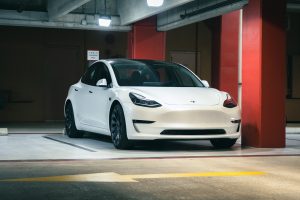
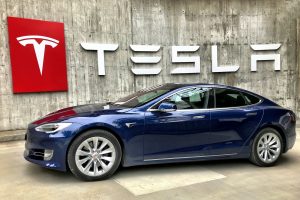
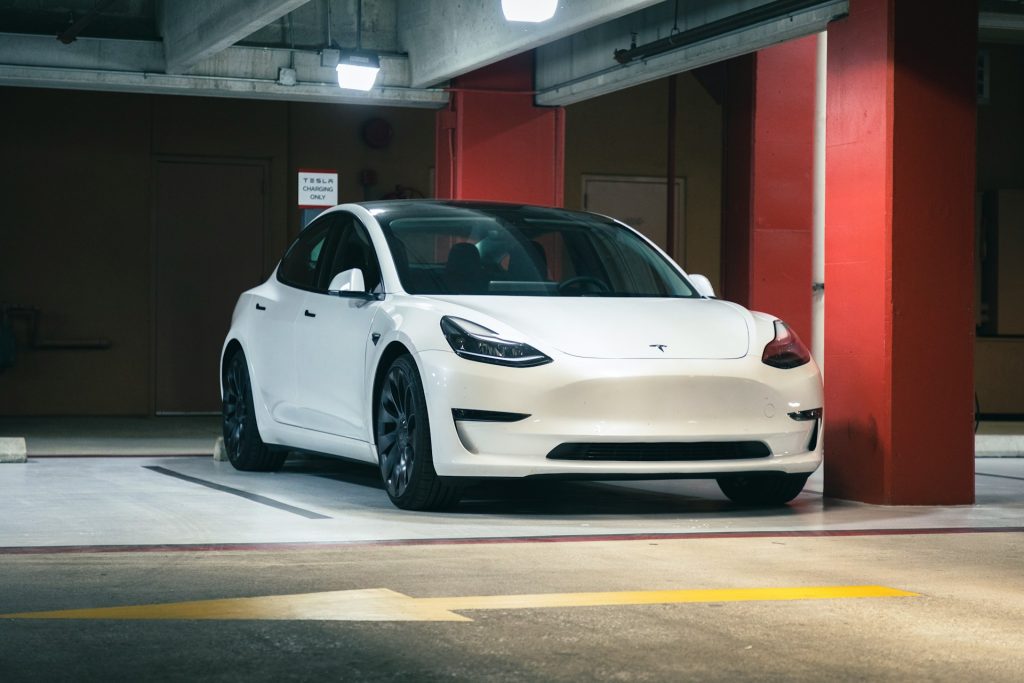
Through its ARK Next Generation Internet ETF, the firm dumped 7,478 shares of Tesla, walking away with roughly $3.4 million just as the stock managed a 1.74% bump to close at $454.53. It’s a notable trim. While Gary Black and other vocal investors are still relentlessly pitching Tesla’s autonomous driving and future Robotaxi dominance as massive growth catalysts, the automaker has undeniably been lagging behind heavyweights like the S&P 500 and the NASDAQ 100. Still, there’s no need to sound the alarm on Wood’s faith in Musk just yet—Tesla remains Ark’s crown jewel, with a massive $949.82 million stake that still anchors over 12% of the fund’s total weight.
Ark didn’t stop at Tesla, taking a much sharper axe to Meta Platforms. They dumped over 14,000 shares across two ETFs, cashing out around $2.08 million. The timing here tracks perfectly with the internal shakeups happening at Meta. Mark Zuckerberg is effectively throwing cold water on his once-beloved metaverse project, prepping for brutal 2026 budget cuts that could slash the division by 30% and trigger layoffs by January. After burning through a staggering $70 billion-plus since 2021 on virtual reality and Horizon Worlds against dismal user adoption, Meta is pulling the plug to pivot hard into AI and hardware. Wall Street evidently loved the reality check, sending Meta’s stock up over 3%.
So where is Ark parking this newly freed capital? Right into the volatility of the crypto market. The firm scooped up 52,200 shares of the ARK 21Shares Bitcoin ETF for about $1.6 million, snapping up the dip while Bitcoin was hovering slightly lower around the $92,500 mark. Add that to the $2 million in ARKB they bought earlier in the week, alongside fresh positions in Trade Desk, Pure Storage, and WeRide, and it’s clear Ark is recalibrating its bets toward AI infrastructure and digital assets.
But the hesitation around Tesla from institutional heavyweights might go deeper than just recent market underperformance. Wall Street is currently trying to price in a massive, looming question mark: the increasingly tangled web of Elon Musk’s various companies.
Following a somewhat turbulent IPO debut that saw its stock take a 30% haircut, SpaceX is currently the subject of intense market speculation regarding a potential mega-merger with Tesla. The day traders might be jumping ship, but long-term capital is zeroing in on the fact that the boundaries between Musk’s ventures are basically disintegrating. Tesla is no longer just a car and battery company, and SpaceX isn’t just launching rockets.
After SpaceX acquired the AI startup xAI earlier this year, the core ingredients of Musk’s artificial intelligence utopia ended up awkwardly split across different corporate entities. Fusing them into one massive conglomerate would clean up the administrative nightmare and streamline decision-making. For investors, it would mean finally getting to bet on an integrated, transparent tech ecosystem rather than trying to parse out the financials of deeply intertwined side-hustles spanning humanoid robots, orbital tech, and self-driving cars.
The clearest proof of this blurring line is “Terafab.” This multi-billion-dollar joint venture—spearheaded by SpaceX, Tesla, xAI, and now backed by Intel—is designed to be the largest semiconductor factory on the planet. We’re talking 100 million square feet of manufacturing footprint built to churn out terawatt-scale computing power. The goal is to completely cut out external suppliers for the high-performance chips required to train AI. SpaceX desperately needs that silicon for its orbital operations, while Tesla needs an endless supply of compute to power FSD and its Optimus robot lineup. Building a facility this massive burns an incredible amount of cash; merging the companies would make funding and executing the Terafab project infinitely smoother.
Then you have the xAI dependency issue. Tesla is increasingly relying on xAI’s Grok models to serve as the “brain” for its digital assistants and future iterations of the Optimus robot. It’s an incredibly weird dynamic where Tesla is fundamentally reliant on a core technology developed outside its own walls—and currently owned by SpaceX. A merger completely neutralizes that strategic vulnerability, locking in Tesla’s access to state-of-the-art AI.
The synergies stretch all the way into orbit. SpaceX has this wildly ambitious roadmap to build AI-driven data centers in space, using massive satellite constellations powered directly by solar energy. It sounds great on paper, but engineering a power grid in a vacuum is notoriously difficult, especially when those satellites drift into Earth’s shadow. This is exactly where Tesla’s deep bench of battery and energy management expertise becomes mission-critical. Custom-built Tesla storage systems could keep those orbital servers humming through the dark phases, allowing for more flexible orbits that wouldn’t wreck the night sky for astronomers—though it introduces a whole new set of brutal engineering challenges regarding weight and battery degradation in space.
Whether Musk actually pulls the trigger on a merger is still anyone’s guess, and the market is essentially holding its breath waiting for a definitive signal. But the reality is that Tesla, SpaceX, and xAI are already operating more like a single organism than separate companies. As that ecosystem morphs into something entirely unprecedented, it’s easy to see why funds like Ark might be taking a few chips off the EV table to see where the dust actually settles.